


It’s no surprise that COVID-19 forever changed the in-person classroom learning experience, with school closures during 2020-2022 affecting more than 1.6 billion students worldwide. Now, many years later, we’re still seeing the impact of active recovery efforts, alongside the growing emphasis on innovative instructional strategies, like blended classroom learning.
As classrooms continue to evolve and target effective learning methods amid post-COVID-19 recovery efforts, rapid technology advancements, and declining attention spans, blended classroom learning is simply an instructional method that learners need.
Whether you’re a K-12 or higher ed teacher looking to implement blended instruction models, here, we’ll explore what blended classroom learning is, common models to implement, and ways using video can enhance blended instruction for any type of learning style or environment.
What Is Blended Classroom Learning?
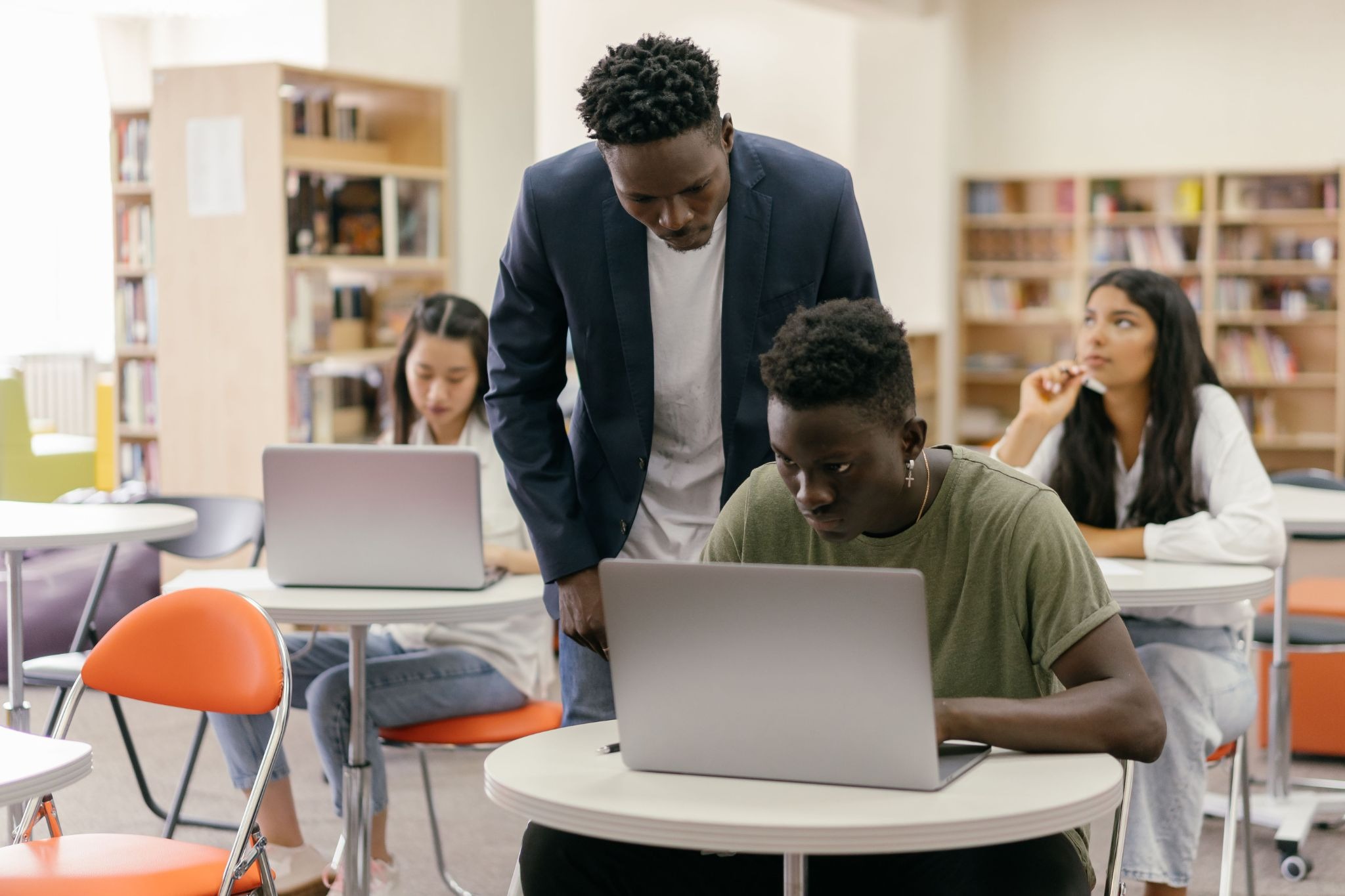
Blended learning is an instructional approach that combines traditional face-to-face teaching with digital or online learning activities. A “best of both worlds” framework, blended classroom learning supports students to have in-person and online learning experiences via interactive assignments, collaboration tools, self-paced coursework, and more.
We’ve officially entered a time in education where the majority of U.S. students, namely 63%, use digital learning tools daily. Not only has digital learning become a common experience in modern classrooms, but a necessary one. 81% of students claim that digital technology actually helps improve their grades. Therefore, it’s safe to say that some version of blended instruction is expected. Without it, learner engagement, performance, and retention is at risk.
Even though blending in-person and online learning is intuitive for a generation spent on screens, navigating educational screen time on top of regular technology use is not without its challenges, too.
Let’s explore the top three blended classroom learning models and what to know before implementing them.
1. Station Rotation
The station rotation model offers a student-centered learning environment in which students rotate among small-group areas, or stations. As technology has become an integral part of learning over the last couple of decades, the blended-learning station rotation model has incorporated online learning in addition to instructor-led small groups, independent reading lessons, and collaborative activities.
Some benefits to using the station rotation model include:
- Personalized learning: Students learn in ways that suit their preferred learning style.
- Increased student engagement: Diverse learning activities promote engagement.
- Heightened student agency: Learners exercise independence and cultivate student empowerment.
- Formative assessment opportunities: Teachers can monitor learners during activities and identify instructional gaps.
Challenges to using the station rotation model include:
- Classroom management: Time constraints, movement, and space are all variables to consider in delivering a smooth station rotation lesson.
- Accessibility: Learners may vary in their access to technology outside of school.
- Student independence: Some learners may require more direct, hands-on supervision.
- Teacher preparation time: More activities require more teacher preparation.
2. Flipped Classroom
Flipped classrooms and blended classrooms are often used interchangeably, but there are subtle yet significant differences. While blended learning uses a combination of in-person and online learning activities both inside and outside of the classroom, flipped classrooms flip the traditional learning structure.
So, if traditional classrooms use classroom time to learn and at-home (homework) time to practice new skills, flipped classrooms do it oppositely: They use classroom time to practice the new skills that are learned at home.
Importantly, flipped classrooms are absolutely a type of blended learning, but not all blended learning is flipped learning. Flipped classrooms focus on the order of learning activities, whereas blended learning focuses on the combination of learning activities.
Benefits to using the flipped classroom model include:
- Encourages active participation: Replacing teacher-led instruction with student-led creation activates the learning experience.
- Fosters critical-thinking and collaboration: Flipped classrooms support social-emotional learning skill development, peer review practice, and problem-solving skills.
- Promotes self-paced learning: Having videos assigned at home lets students learn at their own pace.
- Real-time feedback: Flipped classrooms let students maximize classroom time to get questions answered, receive feedback, and apply new skills and concepts.
Challenges to using the flipped classroom model include:
- Student accountability: In-class time is dependent on out-of-class studies and assignment completion.
- Accessibility: Varying levels of access to technology may disrupt this model.
- Assessment and monitoring: Educators may not have an accurate pulse on learner knowledge retention before each class.
- Maintaining engagement: Independent learning at home may not work for every learner, unless educators use a dynamic video learning platform to support engagement.
3. Flex Model
The flex model is the blended classroom learning approach that provides the most flexibility around learner pace and path. In this model, students spend most of their time online, enhancing independence while educators facilitate, offer targeted 1:1 support, or general clarification.
Benefits to using the flex model include:
- Immediate feedback: Using an interactive video learning platform like WeVideo helps educators monitor progress and provide live feedback each step of the way.
- Technology integration: Adopting effective edtech fosters efficient career-ready skills, creativity, and learner autonomy.
- Personalized learning: Learners can dictate their own pace and preference of learning path, including jumps and playlists to fit their needs.
- Flexible instruction: Both educators and learners benefit from flexibility, supporting learners to work at their own pace, while educators can offer personalized assistance to those needing it.
Challenges to using the flex model include:
- Balancing course structure: Too much flexibility can impact learner motivation.
- Limited face-to-face interaction: Only some learners may get face-to-face instruction during this time, possibly perpetuating imbalance in the classroom.
- Too much technology: Navigating an appropriate and effective amount of educational screen time can be a challenge.
- Teacher workload: Offering extensive targeted support may not always serve educators.
Of course, there are pros and cons to every learning strategy, which is why having both blended and balanced learning methods is the ultimate goal. Though too little technology can stunt learning, and too much technology can perpetuate screen fatigue, there is a sustainable middle ground. That is: interactive video learning.
Use Interactive Video to Support Blended Instruction
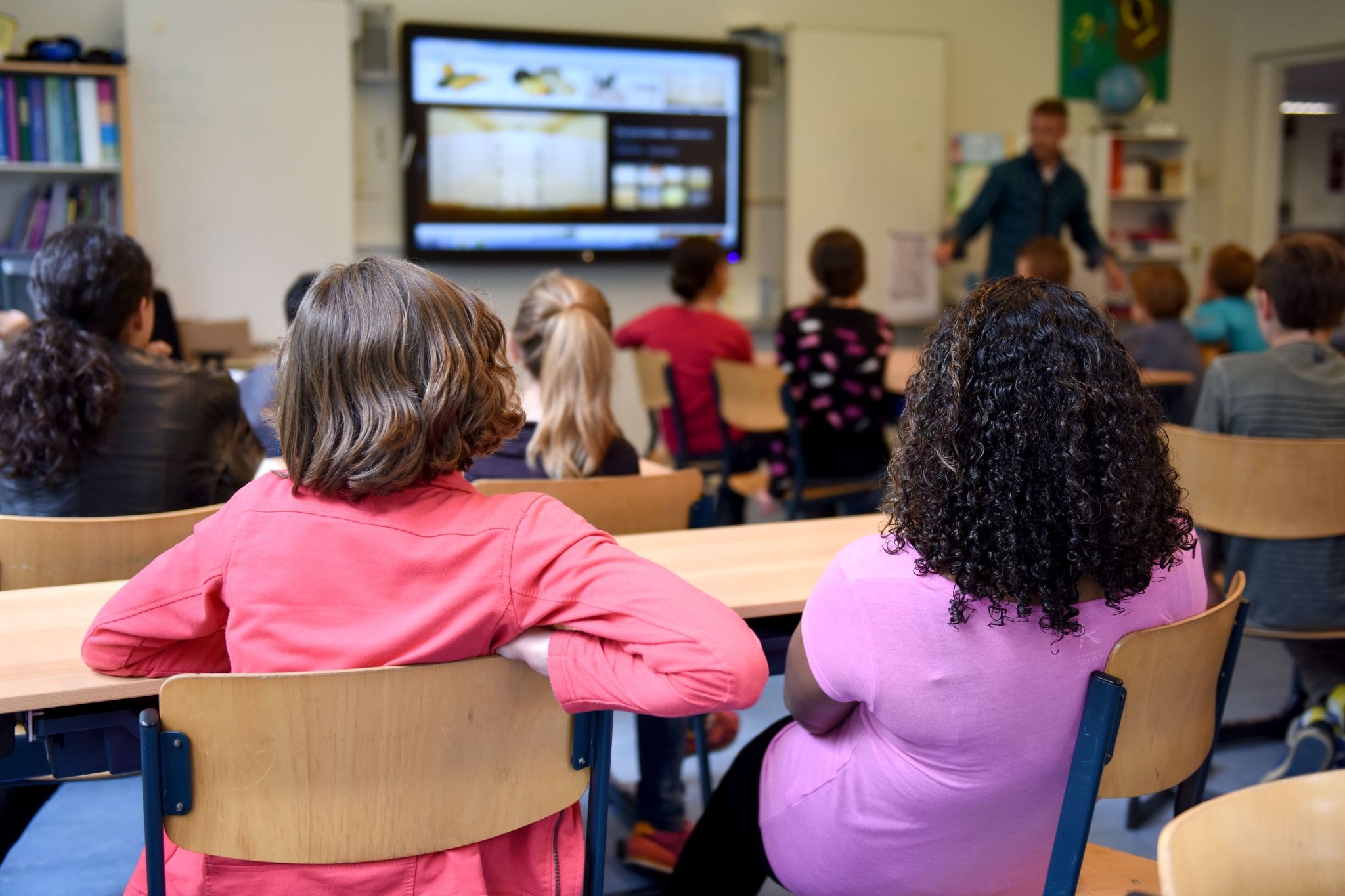
Ultimately, video is designed to strategically enhance instruction, not to replace face-to-face instruction entirely. With countless ways to implement blended learning strategies, finding effective ways to incorporate video can be tricky.
Recorded Lessons
Recorded lessons are a smart way to diversify lectures or instructor-dominant lessons. Recording lessons creates a hybrid format that’s more engaging. Use recorded lessons in any of the following ways:
- Pre-record lessons to assign at home
- Record videos to explain homework assignments
- Record lessons to watch in class
- Implement WeVideo’s broadcast system to turn asynchronous instruction into live learning experiences
- Assign learner-made content so learners can create their own content, submit creative projects, and develop critical digital literacy skills
Tip: Add interactive video elements like multiple choice questions, fill-in-the-blanks, discussion questions, or customizable video questions to boost and monitor engagement.
Flipped Content
Flipped content, or content that’s learned before class to be applied in class, is easily supported with video. Video is more engaging than standard textbook learning as it provides a multisensory experience. It’s also easy to pause, rewind, and review content using video, further supporting learner needs and retention.
Use video with flipped content in any of the following ways:
- Have students watch recorded lessons at home to prepare for in-class activities.
- Have students record their own videos to present to class.
- Use instructional videos to better explain concepts.
- Use video for quizzes or knowledge checks.
- Assign gamified lessons for interactive learning experiences.
Student-Created Video
Hands-on learning is a critical strategy for learners to integrate and apply new concepts. To foster skill development, career readiness, and enhance learning outcomes, assign student-made content to any lesson. This might include adding titles, subtitles, or green screen effects to digital content, using narration or voiceover, or using screen and webcam recording.
Amplify learner empowerment, voice, and choice in any of the following ways:
- Create a video demonstrating a science experiment.
- Create a digital book report.
- Make a podcast episode interviewing a peer about a topic.
- Screencast your thinking to explain a process.
- Make a collaborative video for a research project.
There are countless ways to engage learners with video, but deeper learning isn’t solely about having the right ideas — but also having the right tools in place to implement them. Using WeVideo’s all-in-one video platform stacked with ready-made templates, standards-aligned video assignments, robust course creation software, and transformative analytics tools makes it easy to streamline workflows and scale success in blended learning classrooms and beyond.
Strengthen Blended Classroom Learning with WeVideo
As federal education funding cuts, AI advancements, everyday technology consumption, and post-pandemic education continue to influence learning, it’s only become more urgent to foster effective instructional approaches, like blended classroom learning. As the world is forced into change, educators and learners can still find empowerment in changing with it.
WeVideo’s interactive video platform exists to innovate learning and reach every learner, regardless of style or environment. Our teacher-friendly and student-centered classroom software has everything you need to transform learning time and time again.
Reach out to us today to see how WeVideo’s powerful video creation tools can amplify blended instruction to keep your class ahead of the curve with the data to prove it.