


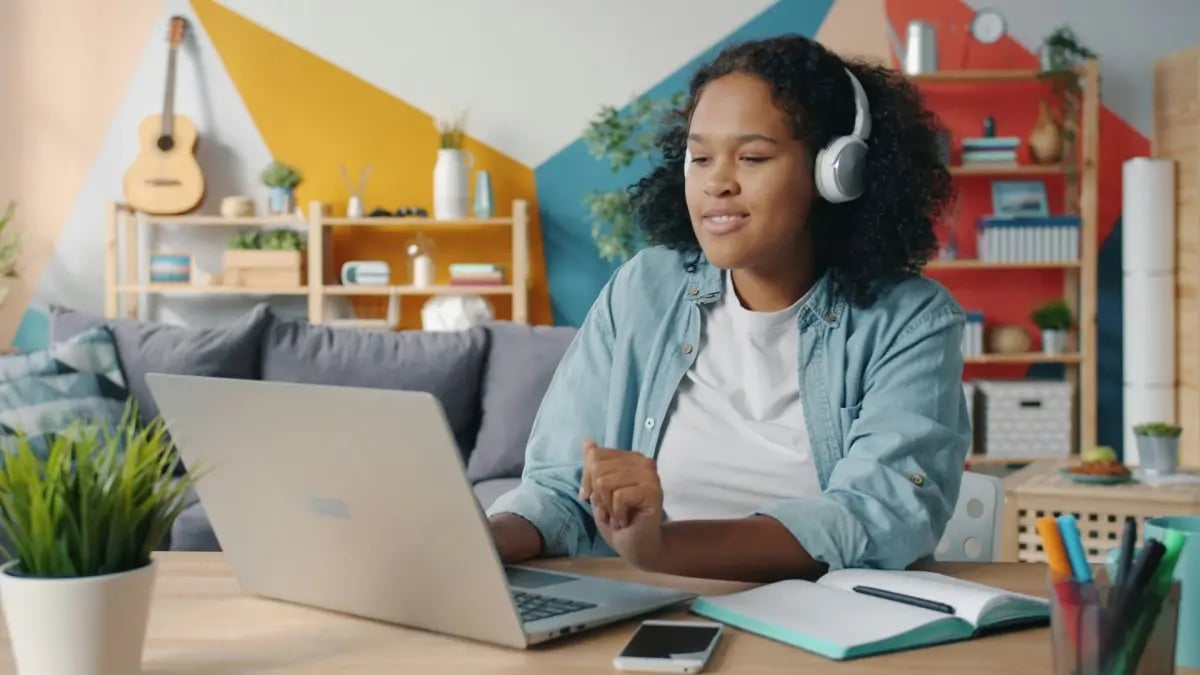
There’s no denying it: Students live in a content creation-first world. From bonding over the latest viral TikTok content and YouTube influencers accompanying drives to school, to passive Instagram scrolling, and more, it makes sense why navigating classroom technology use is a hot topic for schools today.
Student content creation is a critical part of modern classrooms and without it, learners fall behind. Education hasn’t fully caught up to how students interact with media — and the answer isn’t to reduce it altogether. Schools are still skewed towards consumption, when learners really need more creation to best prepare for their futures and careers.
This article explores:
- The technology shift happening outside the classroom
- Why video learning in schools drives better outcomes
- How to implement student content creation effectively
- Student content creation is the future
The technology shift happening outside the classroom
Lectures, textbooks, and standard demos are no longer sufficient for achieving positive learning outcomes. And they also don’t serve as effective alternatives to screen time.
Outside the classroom, students use video as a dominant form of engagement. From creating and editing content for social media, playing video games, experiencing the evolution of AI, and more, screen time is an embedded part of every learner’s every day.
Simply, multimedia is the way today’s learners communicate, so neglecting video learning in schools slows skill development. Our blog, Educational Screen Time: What Schools Are Getting Right (and Missing), discusses why school policies need not reduce screen time, but simply create more intention behind it.
Learners aren’t exempt from this creation economy. In fact, they become natural creators as a byproduct of it. Still, the solution isn’t allowing more screen time just because learners are desensitized. Instead, it's using student engagement tools designed to turn consumers into active creators.
Why video learning in schools drives better outcomes
Creating is active learning. Not only is student content creation more interesting than standard learning methods, but it encourages students to participate in their own creative process from idea to outcome. This supports the following lasting skill development:
- Communication
- Creativity
- Collaboration
- Critical thinking
- Student empowerment
- Student voice and choice
- And more
Additionally, video learning opens up endless creative possibilities to reach learners in various learning environments, whether synchronous, asynchronous, or hybrid. Curious how to reach learners that don’t easily participate? What about those who operate at different paces?
Adopting video learning in schools is a proven way to reach learners how they best learn versus having them cater to a standard, less effective model. The top three outcomes to incorporating video learning in schools are:
- Higher engagement
- Enhanced knowledge retention
- Increased performance
With an all-in-one interactive video platform, it’s easy to spark, monitor, and measure engagement for all types of lessons, learners, and subjects.
How to implement student content creation effectively
Curious how this looks in the day to day? Educators can customize standards-based assignments suited to all learners. Consider assigning:
- Learner-made explainer videos
- Project-based storytelling videos
- Peer teaching with videos
- Video-based podcast episodes
- Morning announcements
- GIFs and memes
- Collaborative research projects
- And more
Innovating classrooms requires rethinking how screen time is used. WeVideo offers a dynamic video learning solution that supports educators to enhance outcomes in their classrooms. Beyond advanced editing tools for learners like green screen, screen recording, and video overlays, and more, educators can easily facilitate while students work.
Powerful analytics tools also let educators track progress, offer real-time feedback, and scale content with proven success strategies. Instead of limiting screen time as a focus, student engagement becomes the focus and video learning naturally becomes part of that. Simply, 21st century skills education requires it.
Student content creation is the future
Creation is active cognitive work and is not equivalent to passive consumption. Whether for digital portfolios, video application submissions, interviews, or truly anything else, there are endless ways that student content creation sets students up for success.