


 In 2026, 625 educators from K-12 and higher ed were surveyed about the impact of AI on learner attention and the results were unignorable. Sector-wide data shows that educators are fighting for learner attention and it’s forcing them to actively adapt to the rapid technology advancement.
When used correctly, there’s no doubt that AI has the ability to support academic learning. But the fight for learner engagement has propelled educators into active learning methods that demand real understanding, better assessments, and pivots away from the traditional lecture like we’ve never seen before.
Here, we’ll explore the following concepts:
- The attention problem is real and measurable
- What’s working: The active learning signal
- The assessment shift
- The technology tension in education
- Navigating the age of AI in education
The attention problem is real and measurable
Source: Pexels.
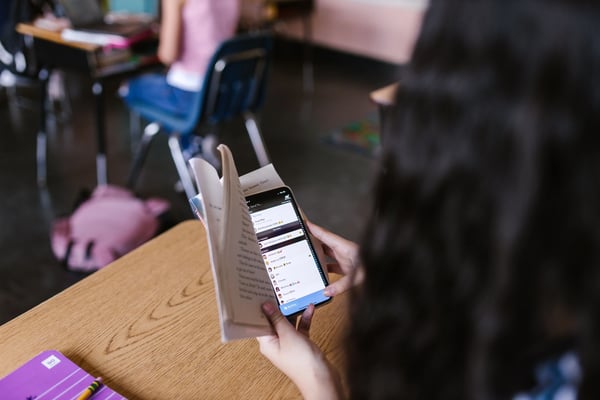
83.9% of educators rate student attention spans as worse than pre-2020 levels. And while AI is partially to blame, passive instruction plays a role, too. It’s no surprise that post-2020 education demands adaptability, creating a foundational shift as learning competes for attention.
Let’s look at the numbers: 89.9% of educators say that lecture is evolving, dying, or already completely gone. Of the educators surveyed:
- 50.6% of them say that traditional lecture is "evolving into something else entirely"
- 33.1% say lecture is "dying but not dead yet"
- 10.1% say lecture is already gone
Being that lecture has withstood the test of time — dating back thousands of years — this transition is monumental. But what lives on the other side is more promising than the discourse shows.
Additionally, a noteworthy generational factor impacts this data. Newer educators spanning one-five years of experience are most likely to say that lecture is already gone (14%), vs. more experienced educators (10.3%). This data not only confirms what educators are feeling, but it proves that active, student-driven learning is the most authentic way forward.
What’s working: The active learning signal
Source: Pexels.
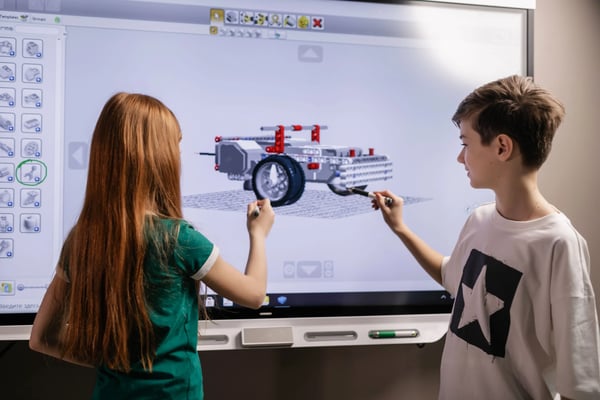
96.5% of educators who track performance observe an improvement in student retention on active learning days. Since only 3.2% of educators see no difference between active and passive learning, the data shows overwhelming support for active learning as more effective.
Pertaining to AI, data shows 84.8% are either concerned or very concerned about AI bypassing genuine understanding. Instead of succumbing to it, however, educators are redesigning curricula and instruction frameworks to activate learning in more effective ways. The study states, "In a traditional lecture, students are receivers of information. In an active environment, they become creators."
The student creation process supports active learning by cultivating future-ready skills designed to last long beyond the classroom. These skills — critical thinking, collaboration, creativity, and communication, to name a few — can all be shortcut by AI if not nurtured appropriately. Active learning environments foster active participants in the classroom and in life.
The assessment shift

Source: Pexels.
As traditional lecture falls away, active learning replaces it. But amid these classroom shifts, has assessment caught up? The data shows that 69.3% of educators have already modified assessments to be AI-proof by shifting to media-based projects. 75.8% say these assignments are a more reliable way of learning.
For an industry that’s already redesigned how to measure learning, the numbers show that beyond a passing trend, active learning is a sector-wide signal. Traditional lecture simply isn’t sufficient anymore to achieve learner engagement. And with AI making it easy to auto-generate work, student creation serves as the antidote to EdTech.
The technology tension in education

Source: Pexels.
Education and technology have met a contentious point in history and for good reason. While effective technology use can optimize education workflows, right now, 72.3% of educators experience some degree of tech fatigue. Why? 45.9% credit incompatible tools to be a top point of friction. Tools that don’t “play well with others” propel burnout, with 45.3% of educators identifying tech fatigue as a primary obstacle to innovation.
On the other side of the EdTech spectrum, using effective technology tools can skyrocket performance outcomes. 84.2% say video technology improves student outcomes compared to text or lecture-only methods. More than 525 out of 625 educators confirm that video earns its place despite the tech fatigue. Ultimately, educators aren’t resistant to technology, they’re resistant to technology that doesn’t pull its weight.
Navigating the age of AI in education
In summary, the data overwhelmingly proves that education isn’t paralyzed by AI itself, it’s simply adapting faster than discourse suggests. Active learning, media-based assessment, and video creation are emerging not as experimental approaches, but as the new baseline.
Though AI and 2020 may have forced education’s hand, the foundational redesign has birthed unmatched innovation. Simply, AI and active learning have raised the bar for educators by shifting the modern educational landscape.
For a complete look at the data, check out WeVideo's 2026 The State of Active Learning report. To learn more about WeVideo’s approach to active learning and ways to innovate your classroom, don’t hesitate to get in touch with us.