



Ah, hybrid learning. No more debates between “old school vs. new school,” or the need to choose between a fully synchronous or asynchronous learning environment. When implemented strategically, hybrid learning provides the best of both worlds to simply reach learners better.
Of course, where there is high potential for success, there are also risks involved in juggling both in person and online learning environments. Here, we’ll explore the definition of hybrid learning, its benefits, and 10 core ways to leverage this method to enhance learning outcomes in higher education.
What is Hybrid Learning?

Though it may sound strange, COVID-19 played a significant role in accelerating the adoption of hybrid learning. Unsurprisingly, today’s educational landscape is still recovering from the devastating impact of learning loss, alongside the $17 trillion loss in lifetime earnings.
While there’s no denying the adversity of that time, the pandemic quickened the integration of technology in ways that have reshaped curricula forever. Add in the rapid evolution of AI, the normalization of daily screen consumption, and the expectation of digital learning tools, and, voila! Hybrid learning becomes the happy medium between being online too much or too little.
So, what exactly is hybrid learning? Hybrid learning is a flexible educational model that combines in-person learning with online learning. A typical hybrid learning format might be: attending class in person three days a week and attending class online two days a week. Another hybrid learning format may include students having the option to attend in person or online, on or off campus.
It’s easy to perceive that hybrid learning is the use of technology in otherwise synchronous classes, but it’s actually a structure that permits learners to learn partially in person, partially remote. There are several educational models and frameworks that are commonly confused, so here’s a quick breakdown of each of them to map out their differences:
- Hybrid learning: Blends face-to-face interaction with self-paced content. The intention is to combine the value of in person interaction with the flexibility of online learning.
- Blended learning: Optimizes digital resources and online learning activities in otherwise synchronous class environments. The intention is to enhance learner engagement and support diverse learning styles.
- Flipped learning: Flipped classrooms “flip” traditional learning, having students adopt new material at home and use in person class time to apply it. The goal of flipped classrooms is to promote self-paced learning and collaboration in class to deepen active learning outcomes.
- Distance learning: Distance learning is a typically more permanent educational model that ensures learners and professors are physically separated for the course. Distance learning empowers extended learning, where geography is no barrier.
- Remote learning: Remote learning can be synchronous or asynchronous, usually as a temporary response to an emergency situation or school closures. Remote learning optimizes flexibility of learning formats using digital resources and communication tools.
At first, these terms are similar, but understanding their differences can clarify the objectives for successful hybrid learning. Other benefits of hybrid learning include:
- Increased access to education
- Enhanced flexibility
- Improved digital skills
- Encouraged diverse learning styles
- Optimized class time
While the promise of hybrid learning is strong, its success can depend on its implementation. The aforementioned learning formats all require structure, strategy, and effective EdTech tools. Whether EdTech is a critical part of your higher ed classroom, or you’re entirely new to it, let’s take a look at the top 10 ways to leverage hybrid learning effectively.
Top 10 Ways to Leverage Hybrid Learning

While EdTech isn’t the only requirement for successful hybrid learning, introducing any online format requires the right combination of tools. After all, just because learners expect the use of technology in education today, doesn’t mean they don’t also need direction for using it.
1. Adopt a Strong Learning Management System (LMS)
Inevitably, introducing online learning formats can create particular struggles, such as: inconsistent attendance, disorganization, increased distractions or confusion, and screen fatigue. Truthfully, regardless of the normalization of technology today, toggling between screens, tabs, screen shares, and collaborative learning tools can be a lot for everyone.
For that reason, having a high-quality learning management system can support educators to seamlessly organize, manage, monitor, and measure progress for every step of the learning process. LMSs make it easy to:
- Generate performance reports
- Assign lessons or course modules
- Promote self-paced learning
- Upload learning materials
- Track progress
- Identify learner gaps
- Provide targeted feedback
- Remediate content to scale
- Grade assignments
Every learning management system is different and its capabilities are dependent on each one. Clarify the most important needs for your hybrid learning environment before orienting learners with an LMS.
2. Incorporate Interactive Video Learning Tools
To combat passive learning methods, basic recall abilities, and online lecture, interactive video learning has skyrocketed in significance. Using WeVideo’s dynamic video learning platform, for example, seamlessly syncs with learning management systems and video hosts to elevate course content and engagement. Examples of interactive learning tools include:
- Web embeds and PDFs
- Multiple choice questions
- Polls, quizzes, and surveys
- Auto-generated and customizable video questions
- Branched learning and jumps
- Fill in the blank
- Check alls
- Reflective pauses
- Discussion forums
There are countless ways to engage learners, but having a diversity of tools (and in one platform, ideally) can transform standard video into active experiences that foster lifelong skillsets.
3. Promote Peer Learning
The online learning space is an invitation to encourage more peer learning. Some would say nothing replaces in person interaction and perhaps online learning isn’t supposed to. Still, encouraging collaboration, connection, creativity, and communication online is of utmost importance in an environment that poses risk for disconnect.
Examples of peer learning methods might include:
- Peer review with online draft exchanges
- Sharing live Google docs
- Collaborative research projects
- Collaborative video projects
- Creating a group or partner podcast
- Facilitating breakout groups for debate preparation or real-world problem-solving
Group work can feel tricky to facilitate for professors online, but having the right EdTech tools in place can also ease this experience in a way that benefits everyone.
4. Encourage Collaboration
Similar to peer learning, collaboration online may not seem intuitive to learners at first. During COVID-19, when isolation became a byproduct of the circumstance, everyone fell into their specific Zoom room boxes, reinforcing learning (and living) in a solitary manner. Though technology has the ability to disconnect, when used properly, it can do wonders for collaboration, connection, and community, too.
Examples of collaboration tools include:
- Video conferencing (using Zoom, Google Meet, Google Workspace, ClassFeed, etc).
- Live feedback communication
- Screen and webcam recording
- Interactive tools for real-time participation
Ideally, helping learners cultivate a relationship to online learning means using the same combination of tools regularly, not introducing them for one-off experiences. This lets learners experience consistency and familiarity in online learning environments.
5. Personalize and Differentiate Instruction
One of the greatest benefits for hybrid and online learning is its flexibility. However, without enough structure, too much flexibility can amplify disconnect. To avoid this, use online learning structures to personalize and differentiate instruction to better reach learners who may not otherwise participate overtly.
Hybrid learning can tend to the diversity of learning styles and level the learning gap for those who aren’t first to raise their hands. Having opportunities for verbal sharing, internal reflection, group work, solo work, microlearning, and modularized content are strategic ways to cover all bases and invite every learner into lessons more directly.
Personalizing content also promotes meaningful experiences and better rapport between professors and learners, helping professors meet each learner exactly where they are.
6. Lean on Analytics Tools
Analytics tools, especially for online learning environments, are some of the most definitive ways to measure progress and performance. Having in person classes and online classes is different from a fully remote course, but analytics tools can ease any doubts that professors may experience.
Teaching with data empowers educators to deliver quality instruction with confidence. Examples of analytics tools can include:
- Progress tracking
- Auto-grading
- Assessment tools
- Score averaging
- Assignment completion status
- Activity management
- Student response analysis
- Learner gap identification
Bridging summative and formative assessments with analytics can create more structure for educators and learners alike.
7. Engage with Multimedia Creation Tools
Multimedia creation is a creative, fun, and powerful way for learners to enhance critical life skills. Like education, the workplace continues to shift in response to AI-advancements as well. Therefore, preparing learners for their futures with relevant skills means optimizing multimedia creation to foster creativity, curiosity, critical-thinking, and more. Applying multimedia creation in learning may include:
- Creating or assigning video projects
- Making digital portfolios
- Using graphics or illustrations
- Experiencing simulations or gamified learning
- Recording screencasts, instructional videos, or animated presentations
Having learners experience multimedia and also create with multimedia is advised for optimal active learning experiences.
8. Prioritize Student Privacy
Student privacy automatically becomes a top priority when adopting EdTech tools of any kind. Anything that requires learner data or information should raise professors’ eyebrows regarding how to model safe and best practices.
Again, though learners aren’t new to technology, understanding the impacts of digital citizenship and the importance of cultivating digital literacy skills shouldn’t be ignored.
9. Uphold Classroom Standards
Some might argue upholding classroom standards, or classroom management, may be easier in person simply because that’s the traditional and more rehearsed way. Creating a seamless transition between in person and online learning is a practice. One of the ways to support this multi-modal experience is having consistent communication around classroom roles and rules.
Naturally, online learning can create unexpected learning curves for everyone at times. Being able to pivot, support one another, and maintain a flexible mindset are wise rules of thumb for optimal workflow.
10. Offer Virtual Office Hours
Last but not least, professors may wish to offer virtual office hours to support any online learning curves. For successful hybrid learning to exist and maintain its effectiveness, professors need to know that learners are getting what they need to succeed. And sometimes that means some extra 1:1 support!
Communicate availability and the best way(s) to connect with learners to encourage their own agency and ownership of learning. Connecting virtually, even if the majority of class happens in person, can also soften learning curves around technology by spending more time in that space.
Implement Hybrid Learning With WeVideo
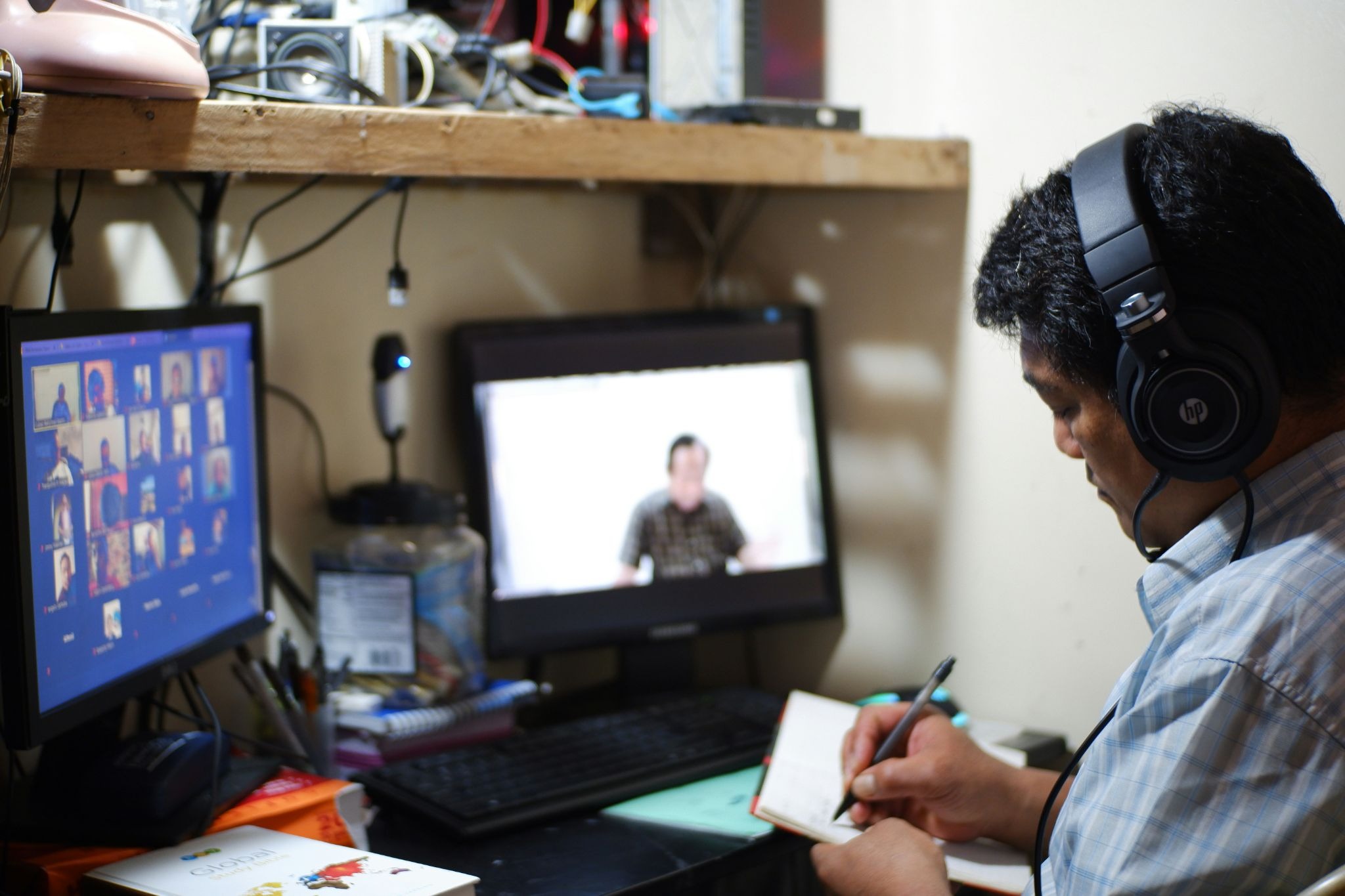
Though hybrid learning ultimately is the best blend of both in person and online environments, how it’s adopted varies from classroom to classroom, professor to professor. That’s why creating and communicating structure around it is of the utmost importance.
Knowing how to scaffold curricula to work for everyone is a daunting task, whether there are already various EdTech decisions, or none, in motion. That’s where WeVideo comes in!
WeVideo helps higher ed leaders, faculty, and professors incorporate interactive video learning with video hosts and learning management platforms to build your dream tech stack without the hassle. Technology shouldn’t be a barrier to education, but it can be without the right support.